Local Car Trailer Rental: Rent a Trailer Near Me
Written by Kyle Debourge, Towing & Hauling Expert at KD Trailer Rentals in Troy, IL. Kyle helps customers across the Metro East choose the right trailer for their project every day.
Moving a vehicle does not have to mean booking a full transport company or borrowing equipment that is not built for the job. A reliable car trailer rental gives you a practical way to move a project car, broken-down vehicle, show car, or newly purchased vehicle with more control over timing and route. The key is choosing the right trailer, understanding the rental terms, and working with a trailer rental service that keeps safety and fit at the center of the process.
What should you look for in a car trailer rental?
The best car trailer rental is the one that matches your vehicle, towing setup, travel distance, and comfort level. Before you rent a trailer, confirm the trailer's weight capacity, deck size, loading method, brake setup, tie-down points, and hitch requirements. A low price can be tempting, but the better value is usually the rental that helps you move the vehicle safely without last-minute equipment problems.
A good rental experience starts with clarity. You should know what type of trailer you are getting, what your tow vehicle must be able to handle, what accessories are included, and what you are responsible for before returning the trailer. If you are searching for "rent a car trailer near me" or "trailer rental near me," compare more than location alone. The nearest option is convenient, but the right local trailer rental provider should also help you choose equipment that fits the job.
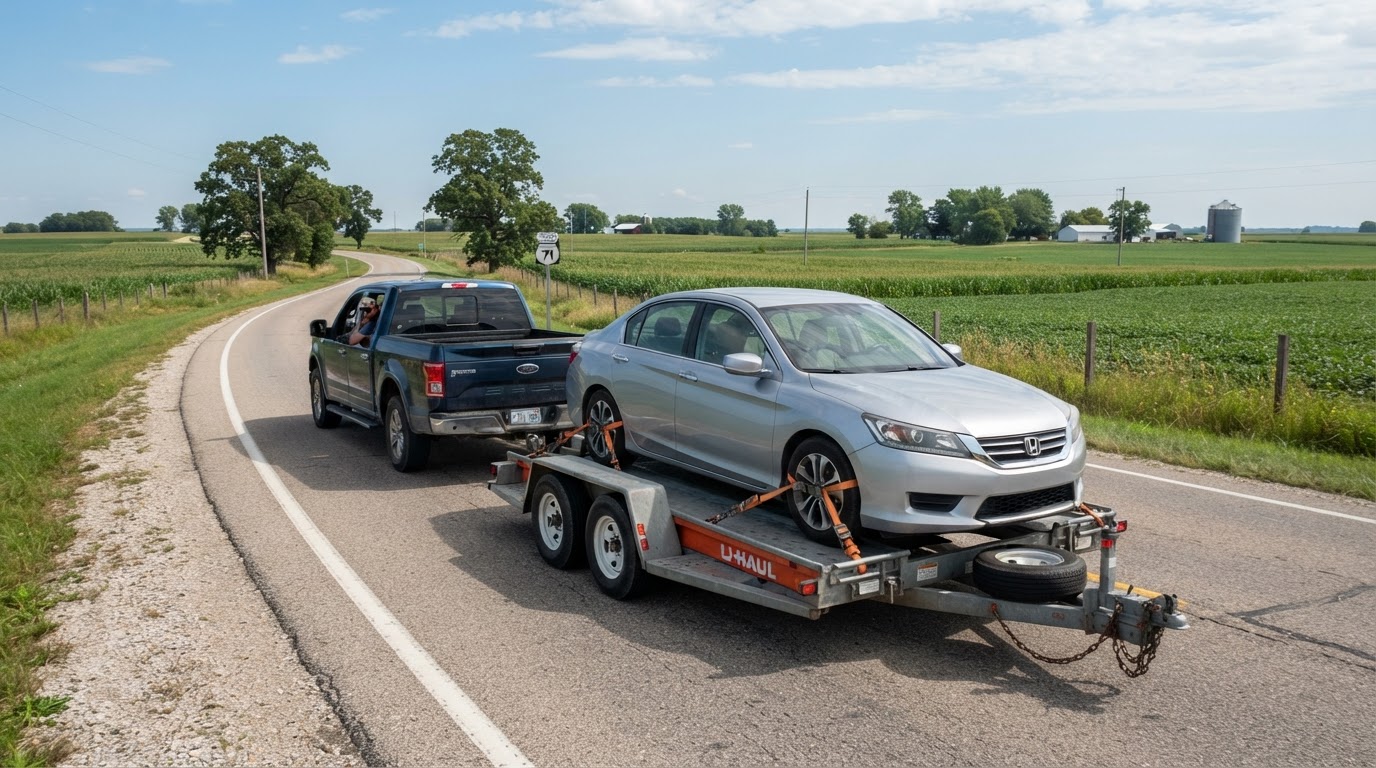
Common reasons people rent car trailers
People use car trailers for many situations where driving the vehicle is not possible, practical, or preferred. Maybe the car has mechanical issues and needs to get to a repair shop. Maybe you bought a vehicle out of town and want to bring it home without adding miles. Or maybe you need to move a classic, race, or project car that should not be driven on public roads.
Car trailer hire can also be useful for short-term needs that do not justify owning a trailer. Buying a trailer means storing it, maintaining it, registering it where required, and making sure it is ready whenever you need it. Renting is often simpler when the need is occasional. You pick up the equipment, complete the move, and return it when the job is done.
Typical uses include:
- Moving a non-running vehicle to a mechanic, body shop, storage unit, or home garage.
- Transporting a newly purchased car from a seller, auction, or dealership.
- Hauling a project vehicle that is not street legal or not ready for regular driving.
- Taking a specialty car to an event while reducing wear on the vehicle.
- Relocating a vehicle during a move when driving multiple cars is not convenient.
Match the trailer to the vehicle and towing setup
Not every trailer works for every car. The vehicle being hauled must fit the trailer deck, and the total loaded weight must stay within the trailer's rating and your tow vehicle's capacity. This includes the weight of the trailer itself, the vehicle being hauled, and any extra equipment you bring along.
The tow vehicle matters just as much as the trailer. Check the owner's manual or manufacturer information for towing capacity, tongue weight limits, hitch class, and brake controller requirements. If you are unsure, ask the rental provider what information they need. A responsible trailer rental service would rather help you choose correctly than send you away with equipment that is not suited for your vehicle.
Open trailers and enclosed trailers
Open car trailers are common for general vehicle hauling. They are easier to load, usually lighter than enclosed trailers, and practical for short or moderate trips. They expose the vehicle to weather and road debris, but they work well for many everyday towing needs.
Enclosed trailers provide more protection and privacy. They may be preferred for valuable, restored, or specialty vehicles. However, they are heavier, often require a stronger tow vehicle, and may cost more to rent. When comparing options for car trailer hire, think about how far you are going, what the vehicle is worth, and whether weather protection is important.
Full car trailers and tow dollies
A full car trailer carries the entire vehicle off the ground. This is often the better choice for vehicles that cannot roll safely, vehicles with all-wheel drive concerns, or situations where you want maximum control over the hauled car. It can also reduce drivetrain wear because no tires from the transported vehicle are rolling on the road.
A tow dolly carries only the front wheels while the rear wheels stay on the road. Dollies can work for some front-wheel-drive vehicles, but they are not right for every car. If you are not certain, choose a full trailer or ask the rental provider for guidance based on the vehicle's drivetrain and condition.
How do you compare local trailer rental options?
Compare local trailer rental options by looking at equipment condition, availability, rental terms, support, and total cost. A trailer that is nearby but poorly maintained or missing essential accessories can create delays and safety issues. A slightly farther provider may be the better choice if they offer cleaner communication, better equipment, and clearer pickup and return expectations.
Start with the basics: location, hours, trailer types, and reservation process. Then look deeper. Are straps, ramps, safety chains, and spare tire information included or available? Does the provider explain hitch size, lighting connection, braking requirements, and loading guidance? These details can make the difference between a smooth rental and a stressful one.
Use this checklist before booking:
- Confirm the trailer's load capacity and compare it with the vehicle being transported.
- Check the deck length and width so the car fits properly.
- Ask whether ramps, tie-down straps, and wheel nets are included.
- Verify the required hitch ball size, receiver height, and wiring plug.
- Ask whether the trailer has electric or surge brakes and what your tow vehicle needs.
- Review pickup and return times, late fees, deposits, and mileage or distance limits.
- Inspect tires, lights, coupler, chains, ramps, winch if included, and tie-down points before leaving.
If you are searching online for "trailer rental near me," make a short list instead of choosing the first result. Call or message each provider with the same questions. The one that answers clearly and asks about your towing setup is often more dependable than one that only quotes a price.
Safety should guide every rental decision
A car trailer is heavy equipment, and safe towing requires preparation. Even a short trip can become difficult if the vehicle is loaded incorrectly, the lights do not work, or the tow vehicle is not rated for the load. Take a few extra minutes before departure to inspect everything and make adjustments.
Load placement is especially important. The transported vehicle should be positioned so the trailer has proper tongue weight without overloading the hitch. Too little tongue weight can contribute to sway, while too much can affect steering and braking. If you are unfamiliar with loading, ask the rental provider to explain the recommended positioning for that trailer.
Secure the vehicle at all four corners with appropriate straps or wheel tie-downs. After driving a short distance, pull over in a safe place and recheck the straps. They can settle as the vehicle shifts slightly on the trailer. Rechecking lights, chains, coupler lock, and ramps is also a smart habit before entering faster roads.
Understand the rental terms before you sign
The rental agreement explains your responsibilities, and it is worth reading before you leave with the trailer. Look for details about damage, cleaning, late returns, roadside issues, cancellations, and what happens if equipment is returned after hours. If the agreement uses unclear language, ask questions before signing.
Cost is more than the posted daily rate. Depending on the provider, there may be deposits, accessory charges, insurance options, mileage limits, or fees for late returns. None of these are automatically bad, but they should be clear. A trustworthy trailer rental service will help you understand what is included and what is not.
Also ask about breakdown procedures. If a tire fails, a light stops working, or you notice a mechanical issue, you should know who to call and what steps to take. This matters more on longer trips, but even local moves benefit from a clear plan.
Booking tips for a smoother rental day
Preparation makes the rental process easier and reduces the chance of delays. Before you book, gather the year, make, model, and approximate weight of the vehicle being transported. Also know your tow vehicle's towing rating, hitch setup, and wiring connection. With those details ready, the provider can give better guidance.
If possible, reserve the trailer in advance. Car trailers may be limited, especially on weekends, around moving dates, or during busy seasons. Waiting until the last minute can leave you with fewer choices or equipment that does not match your needs.
On pickup day, bring any required identification, payment method, and towing accessories the provider tells you to supply. Arrive with enough time for inspection and hookup. Rushing through the process is one of the easiest ways to miss a light problem, loose connection, or misunderstanding about return terms.
When renting is better than buying
Renting is usually the practical choice when you only need a trailer occasionally. Ownership can make sense for businesses, frequent haulers, or hobbyists who transport vehicles often. For many drivers, though, storage space, maintenance, tires, lights, brakes, registration, and upfront cost make ownership less appealing.
A rental also gives you flexibility. One job may require an open trailer, while another may call for an enclosed trailer or a different deck size. Instead of trying to make one owned trailer work for every situation, you can rent a car trailer that fits the specific move.
This is why searches like "rent a trailer," "car trailer rental," and "rent a car trailer near me" are so common. People want a short-term solution that feels straightforward, safe, and cost-conscious without taking on the long-term responsibility of owning hauling equipment.
Final takeaway
Finding the right car trailer rental is about more than picking the closest listing. Look for the trailer that fits your vehicle, works with your tow setup, includes the right accessories, and comes from a provider willing to answer practical questions. When you compare options carefully and prepare before pickup, renting can be a simple, efficient way to move a vehicle with confidence.
If you are in the Troy, IL area and need a car trailer, KD Trailer Rentals offers tilt deck car haulers built for vehicle transport. You can compare the available car hauler rental options or read our car hauler sizing guide to match the right trailer to your vehicle. Not sure whether your truck is set up to tow? Our towing requirements guide walks through tow ratings, hitch sizes, and brake controllers before you book.